
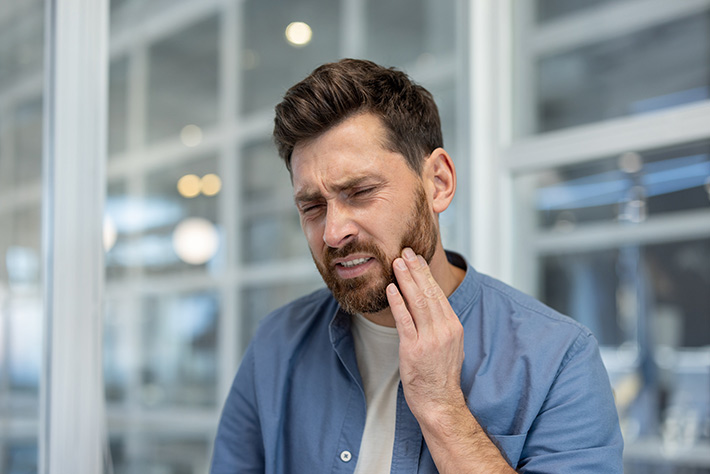
Tooth pain can be sneaky. One day everything feels fine, and the next, you bite into something and feel a quick jolt of pain. Maybe it fades just as fast, or maybe it keeps happening when you chew on that side. If nothing looks obviously wrong, you might be dealing with a cracked tooth.
How Do You Know if Your Tooth is Cracked?
Look out for pain when chewing, random sensitivity to hot or cold, and discomfort that comes and goes. Cracks aren’t always visible, so your dentist might be the only one who can spot it.
Keep reading to find out what a cracked tooth feels like, how it’s different from a cavity, who’s more likely to experience a cracked tooth, and what your dentist can do to fix it.
What Does a Cracked Tooth Feel Like?
Most people report that the pain from a cracked tooth tends to appear during chewing or biting. It often occurs when pressure is applied to the tooth and then disappears once the pressure is released. That sharp, quick pain is a common indicator. You may also experience sensitivity when consuming something hot, cold, or sweet.
What makes this particularly tricky is that the symptoms often come and go. This inconsistency can make it easy to ignore at first, but it’s also what makes cracked teeth difficult to diagnose without a professional evaluation.
In some cases, you might notice slight swelling near the affected tooth or feel as though your bite is slightly misaligned. It is rare, but sometimes a thin line or visible crack may appear, especially if it is near the surface.
However, more often than not, the crack is small or hidden beneath a filling, which is one reason people tend to delay seeking treatment.
Is a Cracked Tooth the Same as a Cavity?
No. A cavity is caused by decay. It’s bacteria eating away at your enamel until it creates a hole. That pain usually feels more like a dull, steady ache, or a sharp reaction to sweets and cold drinks. Cavities are easier to spot and often show up on X-rays.
Cracks are more of a structural issue. They’re usually caused by biting down on something hard, grinding your teeth, or old dental work that has weakened the tooth over time. The pain is sharper, more sudden, and usually only shows up when you’re using the tooth.
Plus, cracks don’t always show up on X-rays, which can make them harder to catch without a close look from your dentist.
Who Is More Likely to Crack a Tooth?
Some people are just more prone to it. If you grind your teeth at night or clench your jaw when you’re stressed, you’re putting a lot of pressure on your teeth that can lead to cracks over time. People with large fillings, older dental work, or a history of root canals are also more likely to have teeth that eventually crack.
Age can play a role too. Teeth naturally wear down and become more brittle as we get older, especially past 50. If you chew on ice, pens, or other hard stuff out of habit, you’re raising your risk. And if you play contact sports without a mouthguard, you could take a hit that cracks a tooth without even realizing it right away.
What Can Be Done About It?
It depends on how deep the crack goes. If it’s just a small surface crack in the enamel, your dentist might smooth it out or seal it with a little bonding material.
For deeper cracks that affect the strength of the tooth, a crown is usually the go-to fix. It covers the tooth and keeps the crack from getting worse.
If the crack reaches the pulp, which is where the nerves and blood supply live, you’ll probably need a root canal to clean out the inside of the tooth and stop pain or infection. After that, the tooth is sealed and covered with a crown to keep it stable.
In the worst case, if the crack goes below the gumline or splits the tooth, it might not be fixable. That’s when an extraction comes into play. No one wants that, which is why catching cracks early makes a big difference.
What Happens If You Ignore It?
Cracks don’t get better on their own. They usually get worse. Over time, the crack can get deeper, and bacteria can sneak in. That can lead to infection, more pain, and eventually losing the tooth altogether. So even if the pain is on and off, it’s worth getting it checked.
The longer you wait, the fewer options you’ll have to save the tooth. A little discomfort now can turn into a much bigger issue later.
Catch a Cracked Tooth Early
Cracked teeth don’t always come with big warning signs. Sometimes the only clue is a little twinge of pain when you chew or sip something cold. It might not be constant, but it’s still worth checking out. If it is a crack, your dentist can help figure out how serious it is and what to do next. With early treatment, most cracked teeth can be saved.
Trusted Dental Care in Walled Lake
If something feels off, contact Walled Lake Dental Office to schedule an evaluation and protect the tooth early. Dr. Hechtman is a trusted, experienced dentist who families throughout Walled Lake and the surrounding areas rely on for comprehensive care – from cosmetic dentistry to restorative treatments – helping you maintain a smile that’s healthy, bright, and long-lasting.