
As the school buses start rolling again families begin to establish routines. Backpacks get hung in the same place so they can be found every morning. Homework gets done at the same time each evening so parents are sure their kids are keeping up with their assignments. Clothes are put out each evening to make dressing in the morning easier. Those routines make life easier and provide children with the structure they need to succeed.
If you’ve been lax about oral health, now is a great time to add regular tooth care to the routine list.
Why Preventing Cavities Matters
Focusing on your child’s oral health is important since almost a quarter of U.S. children ages 2 to 5 have or have experienced a cavity in their baby teeth.1 For children age 2 to 19 years over 40 percent have one or more cavities.2
Not only are cavities painful, but young children are often anxious during the treatments needed to eliminate the cavity with drilling and filling (or extraction in extreme cases). Prevention is the best way to avoid this scenario.
Build Good Brushing and Flossing Habits Early
The American Dental Association (ADA) recommends the following to maintain good oral health habits in children aged 3 to 6.3
- For children 3 to 6 years of age, use a pea-sized amount of fluoride toothpaste. Brush teeth thoroughly twice per day (morning and night) or as directed by a dentist or physician. Supervise children’s brushing and remind them not to swallow the toothpaste.
For older children and teens the ADA recommends:
- Continue to encourage kids to use fluoride toothpaste in their twice-daily brushing routine.
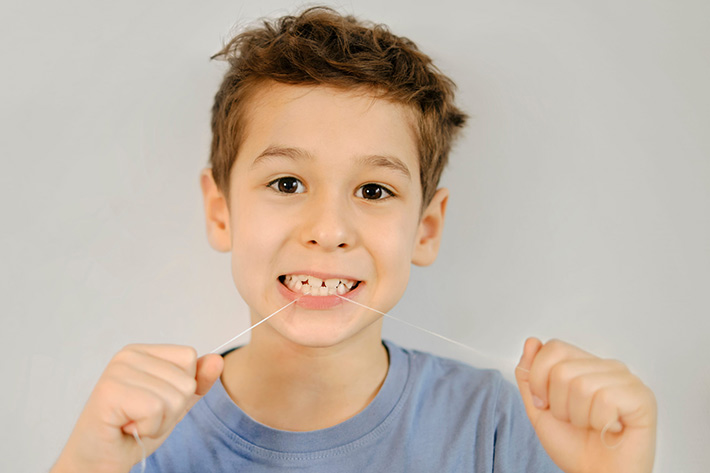
Flossing should start once a baby has two teeth that touch and parents should supervise their child when flossing until they are about 10 years of age.4
All children should be using fluoride toothpaste. Children six years and older can also benefit from daily use of fluoride rinse, especially if they are not getting fluoride in their drinking water.
Be Consistent with Oral Care
Keep in mind that research as found that it takes an average of 66 days to form a new habit.5 Be consistent and patient. The results will be well worth the effort.
Start the School Year with a Healthy Smile
A strong oral health routine at home is an important start, but regular dental checkups are just as important for catching small problems before they become bigger ones.
Dr. Steven Hechtman, DDS in Walled Lake provides family dental care for children, teens, and adults, including routine exams, cleanings, preventive care, and treatment when dental problems arise. If your child is due for a checkup or you want to get their smile back on schedule for the school year, contact our Walled Lake dental office today to schedule an appointment.
______________________________________________
1 Current State of Children’s Oral Health in the US by Mara Sugue, 3/25/2026
Link: https://www.newmouth.com/oral-health/pediatric-dental-statistics/
2 Maintaining and Improving the Oral Health of Young Children by David M. Krol and Kaitlin Whelan, 2023
Link: https://publications.aap.org/pediatrics/article/151/1/e2022060417/190307/Maintaining-and-Improving-the-Oral-Health-of-Young?_
3 Healthy Habits
Link: https://www.mouthhealthy.org/life-stages/babies-and-kids/healthy-habits-babies-and-kids
4 Flossing and Children
Link: https://www.stanfordchildrens.org/en/topic/default?id=flossing-and-children-90-P01852
5 How Long Does it Take to Develop a Habit? What Science Says, 3/12/2026
Link: https://scienceinsights.org/how-long-does-it-take-to-develop-a-habit-what-science-says/